

Northamptonshire Logistics Investment Drives Jobs, Planning Activity, and Debate
Northamptonshire sits at the centre of England’s distribution network, where the M1 corridor meets the rail freight spine running north to south. That position has made the county a target for sustained logistics investment, with warehouse developments, rail freight interchange proposals, and industrial land deals drawing national and international attention. This article examines what is driving that interest, how planning activity is responding, what economic benefits are emerging, and where local communities are pushing back.
Why Northamptonshire Remains a Prime Logistics Location
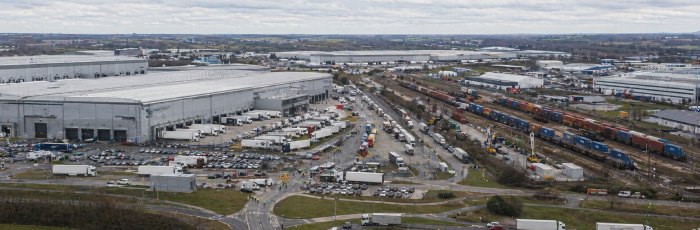
Who really rules here is geography. For example, Northants straddling the M1 and A14 is within four hours’ drive of ca. ninety percent of the UK population. It would be difficult to find that kind of reach by looking farther afield, especially for national distribution network operators.
In underscoring the role of the county, the Daventry International Rail Freight Terminal (DIRFT) really helps. Mixing road and rail freight activity here means lowering some of the reliance upon motorway capacity and providing the occupants with easy access to the wider European freight network, via the Channel Tunnel corridor. Major occupiers such as Amazon and Asda located at DIRFT during the course of successive rounds of development.
The availability of employment land presents considerably competitive conditions compared to the South East. This is exemplified by the strategic allocations of employment lands that have been ringing the northern Border among Northampton, Kettering, and Corby by their local planning authorities for quite a while. Working hand in hand with a highly skilled warehousing and distribution workforce has turned the county into an essential long-term supply chain-to-institutional investor asset than one of the short-term opportunistic bets.
Jobs, Business Growth, and the Shape of New Investment
Warehouse and distribution projects currently dominate Northamptonshire’s commercial property pipeline. The Daventry International Rail Freight Interchange (DIRFT), operated by Prologis, remains the county’s flagship site, now spanning over 900 acres and housing occupiers including Royal Mail, Tesco, and Asda. A third phase of development at DIRFT added roughly 6.6 million square feet of logistics space, with construction activity alone sustaining hundreds of temporary jobs.
Recruitment at sites like these rarely stops at warehouse operatives. Employers increasingly partner with Northampton College and the University of Northampton on degree apprenticeships covering supply chain management and logistics operations. Clipper Logistics, active across the region, has publicly backed such schemes as a route into structured careers.
West Northamptonshire Council estimates logistics contributes significantly to local business rates income. Supporters point to multiplier effects: haulage contractors, equipment suppliers, and facilities management firms all cluster around major distribution centres, spreading economic activity into surrounding towns.
Planning Pressure Brings Opportunity and Opposition
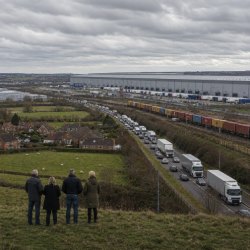
Large logistics schemes rarely arrive without a fight. Across Northamptonshire, planning applications for warehouse and distribution developments have drawn sustained objections from parish councils, residents, and campaign groups concerned about traffic volumes, noise, and the loss of agricultural land.
West Northamptonshire Council and North Northamptonshire Council both face pressure to balance inward investment against infrastructure capacity. Roads around the A43 and A45 corridors are already strained, and critics argue that further development will push them beyond reasonable tolerance.
Developers counter that schemes bring construction jobs, permanent employment, and business rates income that funds local services. The Daventry International Rail Freight Interchange (DIRFT), now in its third phase, is frequently cited as evidence that managed expansion can work.
Northamptonshire Faces a Defining Logistics Growth Test
One of the consistently busy logistics provinces in the country for quite some time, Northamptonshire is a place of strong location fundamentals where one can leave anywhere it’s worth driving a four-hour distance at the most. These fundamentals remain strong even though 2018 threatens to slow down continuing dynamism. Still, the recent planning construction pipeline is full, buoyed by significant demands on massive occupiers. Meanwhile, the Daventry International Rail Freight Interchange (DIRFT) has continued to attract large investments.
It is difficult for anybody to continue to view the market as it is at the moment. The pace of growth is placing increasingly difficult questions upon the table of transport shortcomings and impacts upon communities, defining what Northampton County actually wishes to become over the next decade. The real challenge ahead will be to strike a balance between the economic promise against genuine local scrutiny. This serves to be the real test about how local authorities, developers, and planners manage these dynamics to maintain the competitiveness for investment in the logistics story from the people of the County rather than resistance.